

In high-capacity production lines, the surface cleaning of cast, forged, or heat-treated parts is one of the most critical stages. Loading parts individually onto hangers or waiting for them in batches inside tumble blast machines leads to significant time losses in modern manufacturing. This is exactly where continuous (mesh belt / roller conveyor) blasting machines come into play, completely eliminating bottlenecks in manufacturing processes by providing an uninterrupted material flow.
So, which technical criteria should be considered when integrating a continuous blasting system into a paint shop line or a foundry output? In this guide, we examine the working principles and engineering details of these systems.
Continuous blasting machines are systems where parts are cleaned while moving nonstop on a conveyor (roller conveyor, wire mesh belt, or monorail overhead hanger line) through entry and exit tunnels.
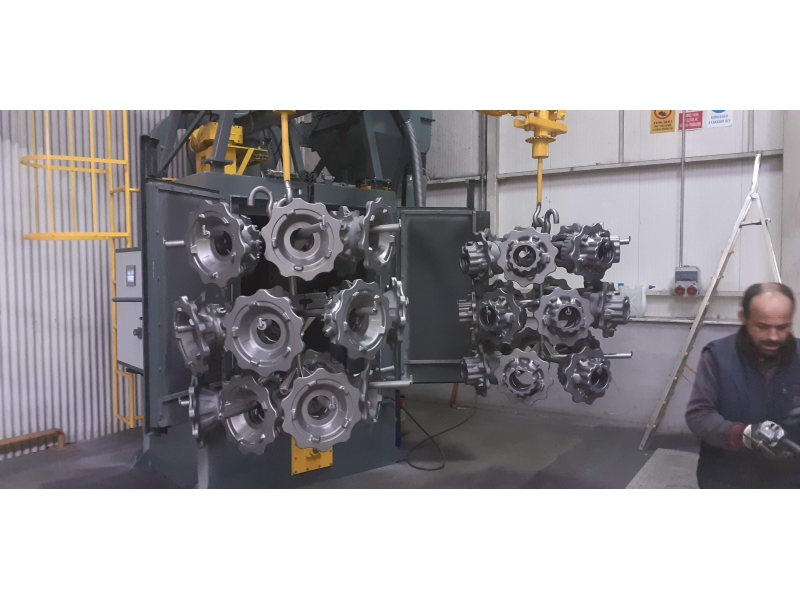
As the parts pass through the tunnel, they are bombarded by high-efficiency blast wheels strategically positioned at various angles. This ensures that all surfaces of the part are blasted homogeneously and precisely in a single pass.
Continuous Feeding: Parts are loaded onto the inlet conveyor in accordance with the speed of the production line.
Sealed Tunnel Passage: Special wear-resistant rubber curtains prevent the blasting media (steel shot/grit) from escaping outside.
Multi-Angle Wheel Bombardment: Blast wheels operate continuously at angles calculated based on the part geometry.
Recovery and Filtration: Used abrasives are automatically transferred to the separator via a screw conveyor and bucket elevator, cleaned of dust, and fed back into the system.
When integrating a continuous system into a factory's paint shop or production line, the following technical parameters are of vital importance:
Throughfeed Speed (Conveyor Speed): The speed of the blasting machine must be synchronized with the overall speed of the production line (meters/minute). Flexibility is typically provided using frequency inverters (speed controllers).
Part Dimensions and Geometry: The width and height of the tunnel must be designed by taking into account the maximum dimensions of the largest part that will pass through the line.
Number and Power of Blast Wheels: The number of wheels required to clean every point of the part (e.g., 4, 6, or 8-wheel systems) and their motor powers (kW) are determined through precise engineering calculations.
Question: Which industries are continuous blasting machines suitable for?
Answer: They are ideal for high-volume and mass-production sectors such as the automotive supply industry, foundries, forged steel manufacturers, profile/sheet metal processing centers, and structural steel fabricators.
Question: How is the speed adjusted in a blasting system integrated into a paint shop line?
Answer: In integrated systems, the blasting machine is connected to the automation system (PLC) of the main line conveyor. When the line speeds up or slows down, the blasting machine's conveyor and abrasive control valves automatically adapt to this speed.
Question: Are wear and maintenance costs high in continuous systems?
Answer: No, they can be optimized with proper engineering and material selection. When high-manganese steel (Hadfield steel) plate linings are used on the inner protective walls of the blast chamber, wear is minimized, and maintenance periods are significantly extended.
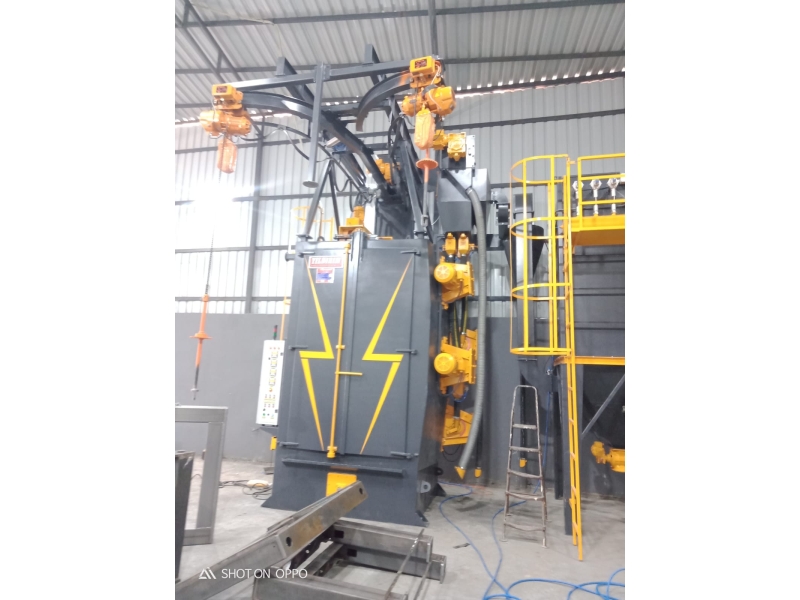
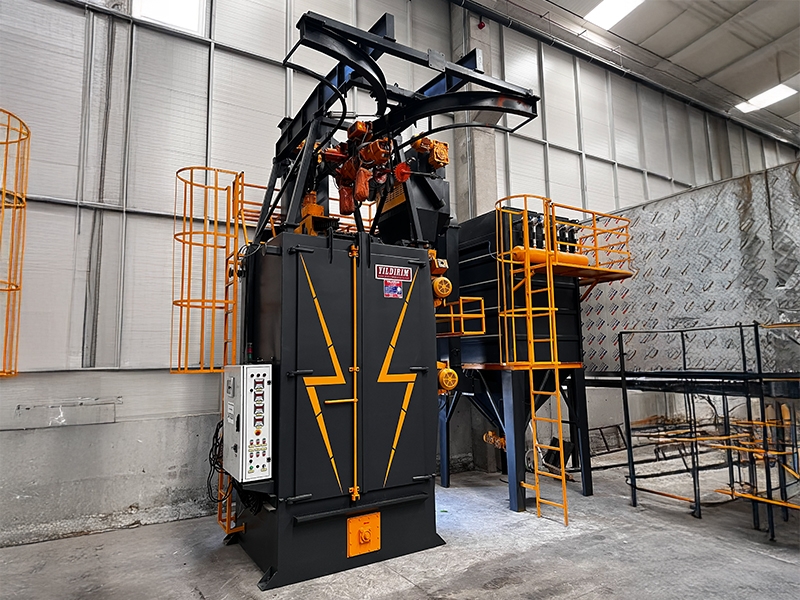
Continuous blasting systems are not just machines; they are the heart of your factory. A poorly designed tunnel or insufficient wheel power can cause the entire production line to grind to a halt. As YILDIRIM MAKİNA, we offer turn-key continuous blasting solutions tailored specifically to your business's part geometry, line speed, and target surface quality (Sa 2.5 / Sa 3).


 en
en  Türkçe